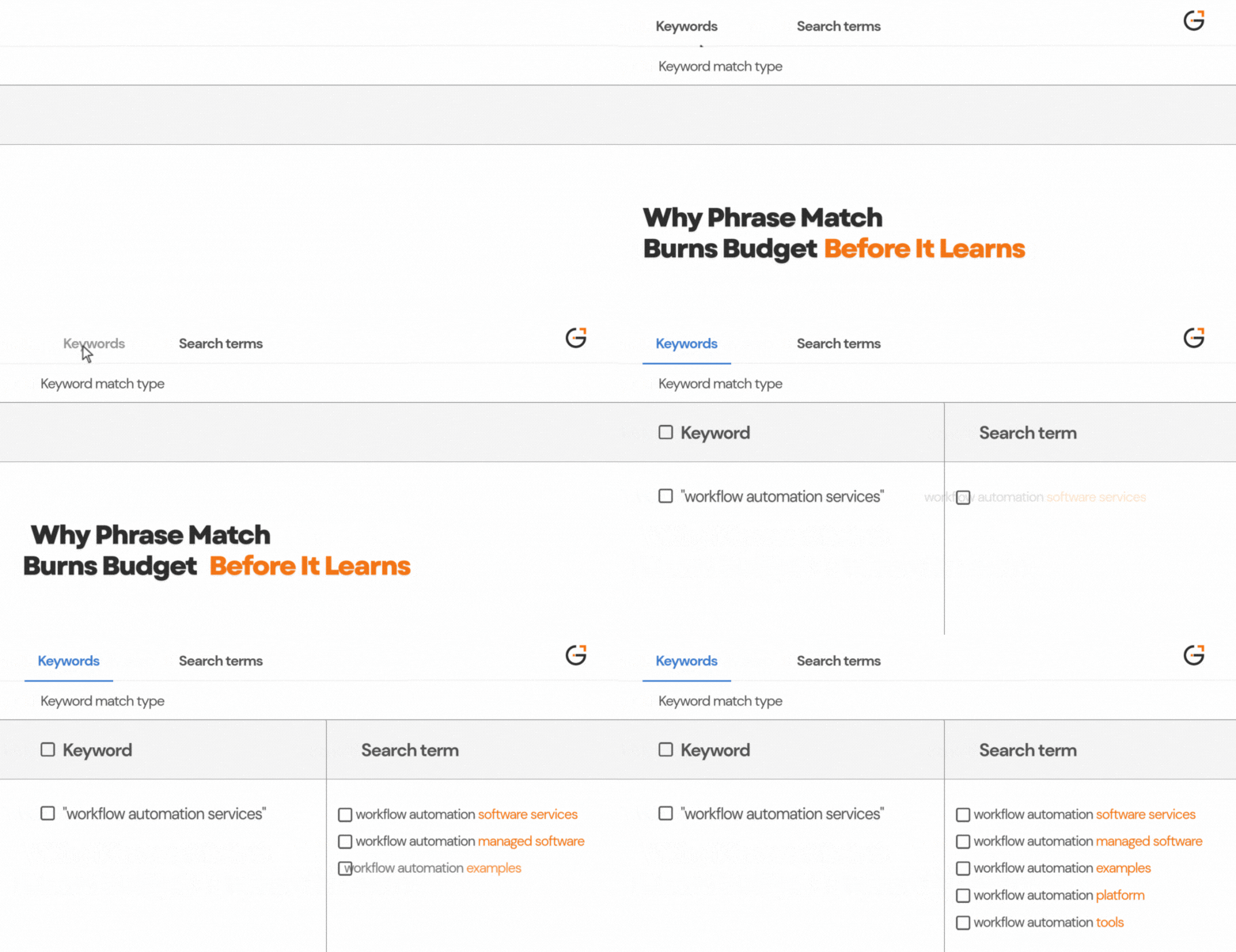
When Phrase Match Actually Makes Sense to Turn On
Phrase match often feels like the responsible next step when you want more scale without losing control.
- You’re not going broad.
- You’re not letting Google do whatever it wants.
- You’re just trying to get more volume.
But here’s something we’ve seen again and again at Think Growth while running B2B service campaigns:
Phrase match doesn’t usually fail because it’s bad.
It fails because it’s turned on before the account is ready.
Let’s break down what actually happens using realistic examples and where the money quietly leaks.
The Clean Starting Point
Imagine you’re running ads for a B2B services company.
You start with Exact match keywords like:
- [workflow automation consulting company]
- [custom workflow automation services]
- [business process automation agency]
Early signals look good:
- Search terms are clearly service-driven
- CPC is stable
- Quality Score sits around 6–7
Naturally, the next question is:
“How do we scale this?”
So phrase match enters the picture.
You add:
- “workflow automation services”
- “process automation services”
- “automation consulting services”
On paper, this looks safe.
In reality, this is where intent starts to slide.
What Phrase Match Really Expands Into
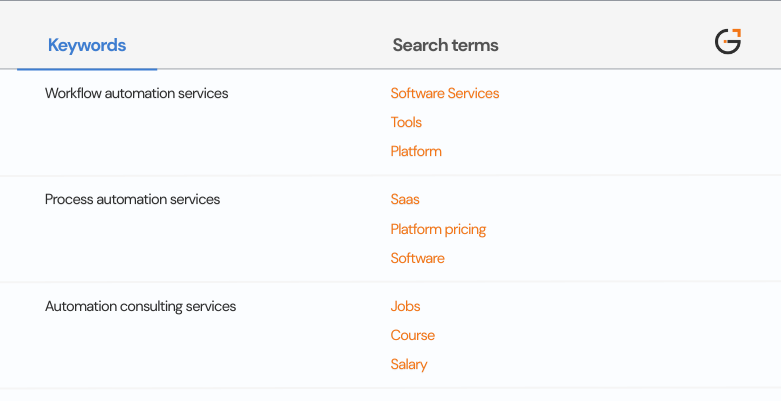
Phrase match doesn’t expand around hiring intent. It expands around topic meaning.
That distinction is expensive.
Example: “Workflow Automation Services”
Phrase keyword:
- "workflow automation services"
Search terms that begin to show up:
- workflow automation software services
- workflow automation tools
- workflow automation platform
- workflow automation managed software
- workflow automation examples
These users aren’t bad leads.
They’re just not leads.
They’re researching tools, platforms, and “how it works” content not looking to hire a consulting firm.
Example: “Process Automation Services”
Phrase keyword:
- "process automation services"
Expanded into searches like:
- process automation SaaS
- process automation platform pricing
- business process automation software
- automation tools comparison
Even though services is in the keyword, Google still interprets this as:
“Anything related to this topic that can be offered as a service.”
Which includes software vendors.
Example: “Automation Consulting Services”
Phrase keyword:
- "automation consulting services"
Triggered searches:
- automation consulting jobs
- automation consulting course
- automation consultant salary
- automation consulting certification
Now the intent has shifted completely from buying to learning or career research.
Why “Services” Isn’t the Safety Net People Think It Is
This is a common assumption:
“If we add ‘services’, intent will stay clean.”
In Exact match, that’s often true.
In Phrase match, it’s only slightly true.
Phrase match treats “services” broadly:
- Software-as-a-service
- Managed platforms
- Educational services
- Professional services
So yes services helps a bit.
But it does not protect you from drift.
The Cost Comparison No One Looks At Early Enough
| Metric | Before Phrase Match | After Phrase Match |
|---|---|---|
| Avg CPC | ₹120 | ₹180–₹220 |
| Conversion Rate | 3–4% | <1% |
| Cost per Qualified Lead | ₹3,000–₹4,000 | ₹8,000+ |
| Search Intent | Service hiring | Tools / jobs / examples |
What changed?
- Not the ads
- Not the landing page
- Not the offer
Only intent quality.
Phrase match increased spend faster than it increased value.
This is one of the most common patterns we see at Think Growth.
The Silent Budget Shift That Makes Things Worse
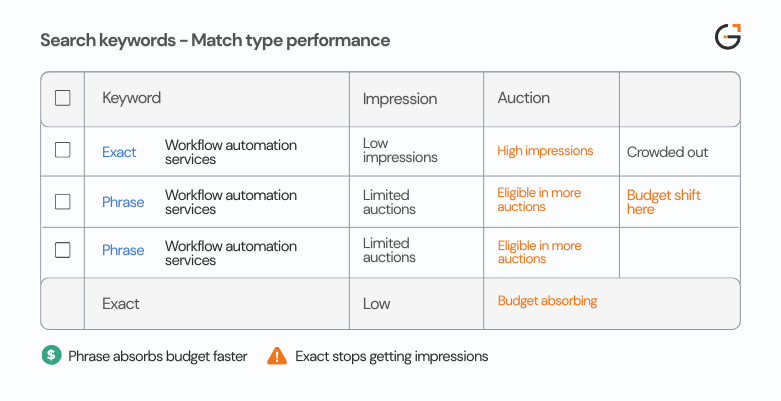
Another problem happens quietly in the background.
When Exact and Phrase run together:
- Phrase qualifies for more auctions
- Phrase absorbs budget faster
- Exact keywords stop getting impressions
So it looks like:
“Exact isn’t working anymore.”
But what’s really happening is:
- Exact is being crowded out by Phrase eligibility
- High-intent traffic is getting fewer chances to show
Why Quality Score Drops Without Warning
Your landing page says:
“We provide end-to-end workflow automation consulting.”
But phrase-triggered users searched for:
- tools
- platforms
- software
- examples
So Google sees:
- Ad relevance: okay
- Landing page experience: poor
Quality Score drops from ~7 to ~3.
CPC rises even on Exact keywords.
Nothing broke.
Intent just drifted.
When Phrase Match Actually Works

Phrase match isn’t the villain.
Phrase match works after Exact match has already taught you:
- Which terms mean “hire a service”
- Which terms drift toward tools or education
- Which modifiers actually convert
Phrase Match Works Best When:
1. Exact match is stable
You already know your winning intent clusters.
2. Negatives are in place
software, tools, platform, jobs, course, salary.
3. Phrase runs in a separate campaign
- Exact = control
- Phrase = exploration
4. Phrase feeds Exact
Any converting phrase term graduates to Exact.
Phrase should discover, not decide.
A Simple Rule We Use Internally
If phrase match search terms start answering:
- “What is this?”
- “How does this work?”
- “Which tool should I use?”
Phrase match is too early.
Final Thought
Phrase match doesn’t learn slowly.
It learns expensively.
Used at the right time, it scales what works.
Used too early, it scales confusion.
At Think Growth, we treat phrase match as a second-stage accelerator, not a starting engine.
Get Exact right first.
Then let phrase expand on your terms.
Request a quote
Let’s take a quick look at your marketing free, honest review
Let’s Grow