Introduction: Why Campaign Structure Decides ROI
Every performance marketer has faced this moment: budgets get spent, clicks come in, but the results feel off. Leads are low, search terms drift away from intent, and quality scores refuse to budge.
The difference between campaigns that scale profitably and those that burn cash often comes down to structure and keyword design. The way you frame keywords and how you separate them by intent, geography, or match type determines whether you capture real buyers or just pay for noise.
Today’s learnings reinforced a few key truths about keyword structures, negatives, and budget allocation that apply across industries.
Lesson 1: Keywords That End in “Companies” Attract Noise
Keywords like development companies or solution providers feel buyer-oriented. But in reality, they often trigger searches like:
- Top companies
- Best companies list
- Industry directories
These aren’t buyers; they’re researchers, students, or competitors.👉 Takeaway: Be cautious with “companies” as a keyword ending. It often attracts broad, low-intent traffic.
Lesson 2: The Placement of “Services” Matters
There’s a subtle difference between keywords like development services and development services company.
- Services company variations tend to trigger generic results with little buyer intent.
- Services on its own, however, aligns more closely with commercial needs and pulls in cleaner queries like app development services.
👉 Takeaway: Small shifts in keyword phrasing can drastically change search intent. Always test “services” vs. “services company” to see which drives higher-quality clicks.
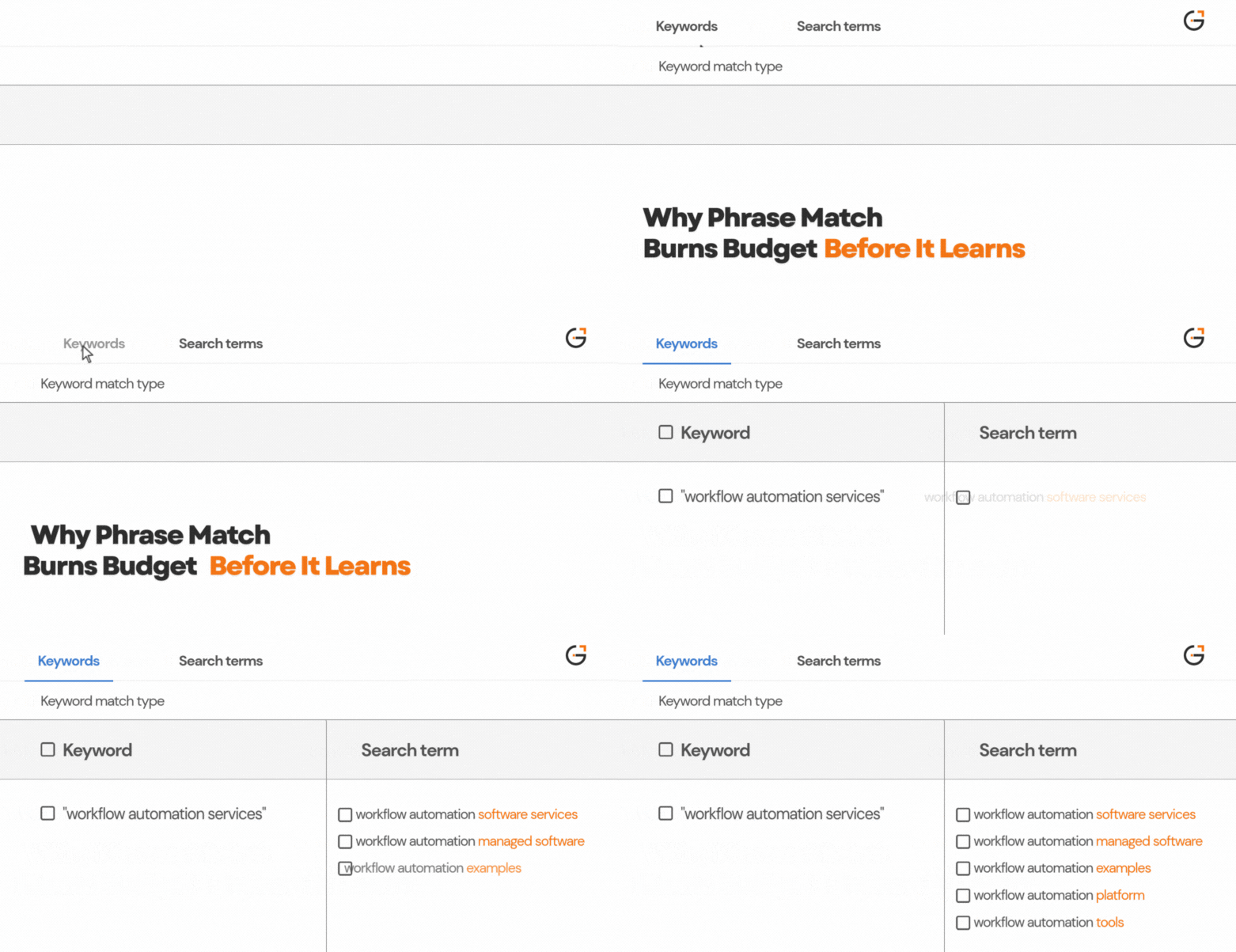
Lesson 3: Phrase Match Is a Discovery Layer, Not the Core Engine
Phrase match gets a bad reputation because it often expands into irrelevant territory. And yes, it will generate noise like competitor names, industry lists, or generic questions.
But buried in that noise are valuable discoveries specific search terms you never thought of that reflect true buyer intent. These can later be promoted into Exact match campaigns.👉
Takeaway: Keep Phrase match running as a controlled discovery tool with strict negatives and limited budget. Don’t let it dominate spend, but don’t ignore it either.
Lesson 4: Geo-Modified Keywords Reveal Local Demand
Sometimes the highest-intent searches come from buyers looking for solutions in their geography. Queries like company in X location or services in Y region directly signal commercial interest.
These terms often emerge in Phrase match but are worth elevating into Exact.👉Takeaway: Don’t wait for geo-modified keywords to surface randomly. Add them deliberately as Exact they tend to deliver the most qualified traffic.
Lesson 5: Budgets Should Flow to Where Learning Is Richest
Looking at campaign structures, a clear pattern emerges:
- Exact with broad nouns (companies/providers): Spends more, but delivers noise.
- Exact with services terms: Smaller spend, but better alignment.
- Phrase match: Produces both noise and hidden gems.
👉 Takeaway: Allocate budgets where signals are strongest. A balanced model looks like:
- 50% = Geo-modified Exact
- 30% = Services Exact
- 20% = Phrase discovery
This ensures you’re testing enough to uncover new terms without letting exploration eat the core.
Lesson 6: Negatives Are Your Lifeline
No matter how clean your structure, search terms will drift. Without active pruning, you’ll waste spend on irrelevant clicks.
A simple rule:
- If >20% of clicks are irrelevant → add negatives immediately.
- Examples: competitor names, industry directories, frameworks/tools that aren’t your offering, “ideas” or “projects.”
👉 Takeaway: Treat negative keyword management as a daily hygiene activity, not a monthly chore.
How to Apply These Lessons to Any PPC Campaign
1. Start with Clear Hypotheses
- e.g., “Keywords ending in services will outperform companies.”
- Launch campaigns designed to validate these hypotheses.
2. Use Phrase Match Strategically
- Treat it like a lab. Let it run with a capped budget and mine it for insights.
3. Promote Winners to Exact
- Treat it like a lab. Let it run with a capped budget and mine it for insights.
4. Protect Budgets with Negatives
- The tighter the negative list, the cleaner the campaign signals.
5. Always Align Ad Copy + Landing Pages
- If you’re testing “services” vs. “services company,” make sure the copy reinforces that specific value proposition. This helps Quality Score and CTR
Hypotheses to Explore Next
- Keyword Design: Does “services” consistently outperform “services company” across industries?
- Geo Variants: How much incremental value do location-specific terms bring compared to generic terms?
- Budget Mix: What is the optimal balance between Exact (high intent) and Phrase (discovery)?
CTR & QS Impact: How much can Quality Score improve when ad copy exactly mirrors service-intent keywords?
Conclusion: Campaigns Are Classrooms
Every campaign is less about “winning” or “losing” and more about what you learn. Today’s data reminded us that:
- Subtle keyword structures change search intent.
- Phrase match isn’t wasted spend if you mine it for insights.
- Geo-modified queries are often the purest signal of buyer intent.
- Budgets need to be actively rebalanced as learnings emerge.
If you treat your campaigns like classrooms, every irrelevant click becomes tuition for tomorrow’s strategy. The goal isn’t to avoid noise altogether it’s to sift through it faster and scale the signals that matter.
Request a quote
Let’s take a quick look at your marketing free, honest review
Let’s Grow