Introduction:
Why Red Flags Matter Most campaigns don’t fail overnight. They quietly leak budget over weeks low-quality clicks, drifting search intent, poor landing page experiences until the numbers are beyond repair. By the time you notice CPA has doubled, the damage is done.
The truth is, success in performance marketing is less about fixing disasters and more about catching early warning signs. That’s why at Think Growth we created the Red Flag Framework a simple way to surface signals that tell us when a campaign is starting to go wrong.
What Is the Red Flag Framework?
The framework categorizes campaign issues into five buckets. These reflect the most common (and costly) ways ad spend gets wasted:
Relevance Drift – when search terms deviate from the keyword’s intent. Wasted Spend – when costs rise but volume or quality doesn’t. Conversion Gaps – when relevant clicks don’t convert into leads or sales. Visibility Issues – when campaigns are running but barely showing where it matters. Quality Score Collapse – when Google signals your ads or landing pages aren’t competitive. Each of these has its own set of symptoms, benchmarks, and fixes.
Real-World Scenarios That Show Red Flags
1. Relevance Drift
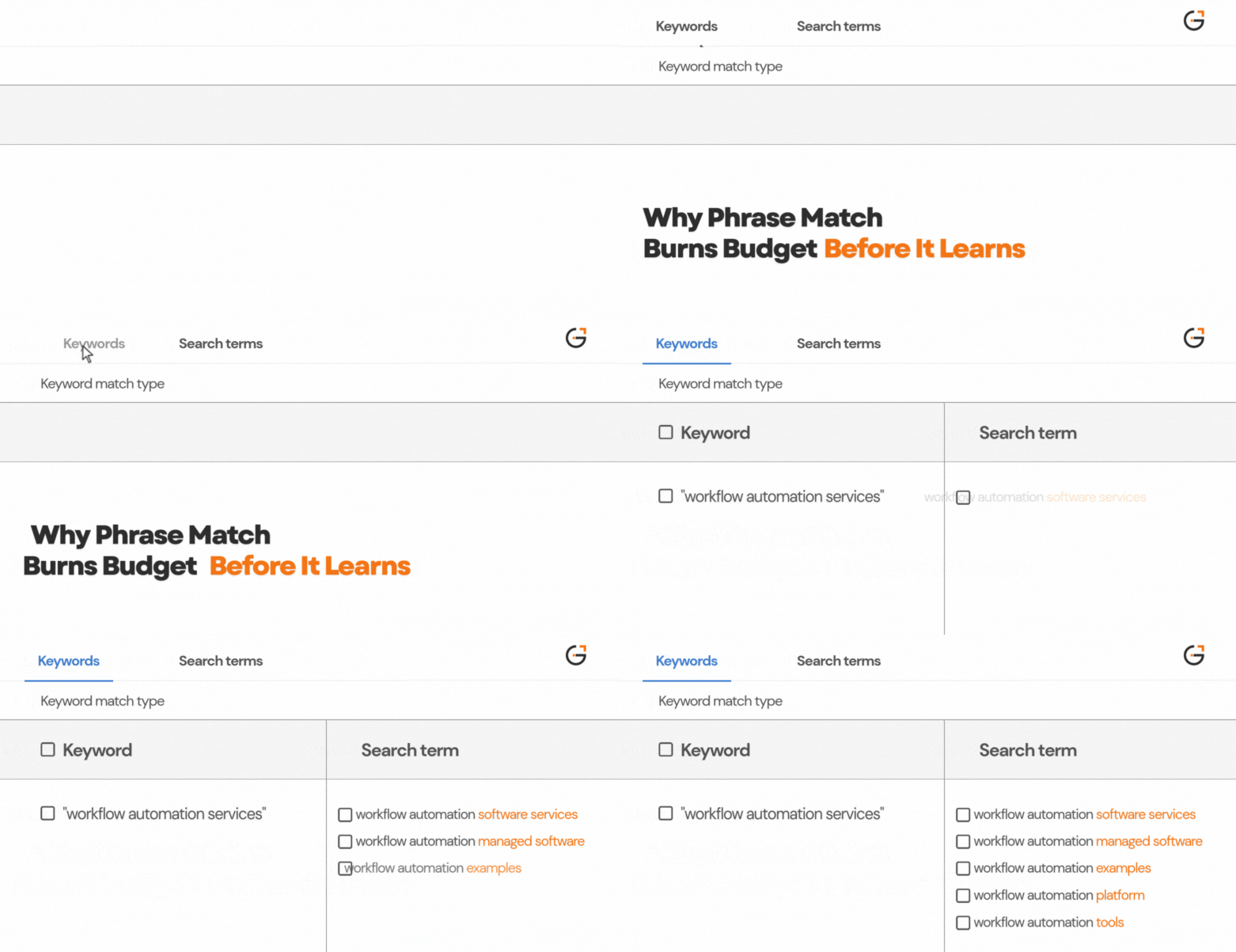
An AI software campaign started with exact match keywords like AI agent development. At first, search terms aligned perfectly. But when phrase match was added, clicks flooded in from competitor names. The CTR looked good, but intent was poor the campaign was drifting away from buyers.
2. Quality Score Collapse
A mobility app project generated strong leads from keywords like app development company. But Quality Score was only 2/10. Google flagged “landing page experience” as below average. Despite decent ad relevance, the poor user experience meant scaling would only multiply inefficiencies.
3. Wasted Spend + Visibility Issues
In international markets, bids were raised as high as ₹600 per click. The result? Plenty of impressions but almost no clicks. Worse, Absolute Top Impression Share stayed under 10%. The ads were technically live but effectively invisible.
How to Spot Red Flags Early, Each Red Flag leaves clues. Here’s what to watch:
CTR below 2% → Ad copy/targeting misaligned. Quality Score < 5/10 → Landing page or CTR problem. Absolute Top Impression Share Phrase > Broad). Split propositions into separate campaigns. Wasted Spend Test bids in lower CPC regions before scaling globally. Pause underperforming geos. Reallocate budget to terms with proven CTR + CVR. Conversion Gaps Audit landing page speed, form UX, and CTAs. Double-check conversion tracking setup. Run A/B tests for offers and messaging. Visibility Issues Increase bids strategically. Improve Ad Rank with better ad copy and extensions. Benchmark competitor impression share. Quality Score Collapse Rewrite ad copy for stronger keyword alignment. Optimize landing page speed and relevance. Ensure messaging consistency from ad to landing page.
Why This Matters: From Logs to Playbooks
The advantage of this framework isn’t just spotting errors it’s about building repeatable playbooks. When one campaign drifted into competitor traffic, the lesson was logged. When another flagged landing page experience as weak, the LP optimizations were documented. Over time, these patterns become a library of fixes. So when a new client or vertical comes in, the answers are already there.
Conclusion:
Catch the Red Flags Before They Spread Performance campaigns rarely implode suddenly. They send small signals CTR dips, Quality Score drops, irrelevant search terms that warn of bigger issues.
The Red Flag Framework turns those signals into action. It’s about catching inefficiencies early, ranking them by severity, and applying the right fix before budgets burn.
This is how Think Growth builds smarter campaigns: daily logs, Red Flag tracking, and client-ready playbooks.
Want to apply the Red Flag Framework to your campaigns before they leak cash?
👉 Let’s talk.
Let’s Grow

Request a quote
Let’s take a quick look at your marketing free, honest review
Let’s Grow